Medellín’s architecture is internationally recognized for integrating innovation, social urbanism, and sustainable development. Its public spaces have transformed the relationship between the city and its residents, promoting inclusion, connectivity, and quality of life. Exploring its architecture reveals how design, culture, and urban planning have made Medellín one of the leading examples of urban transformation in Latin America.
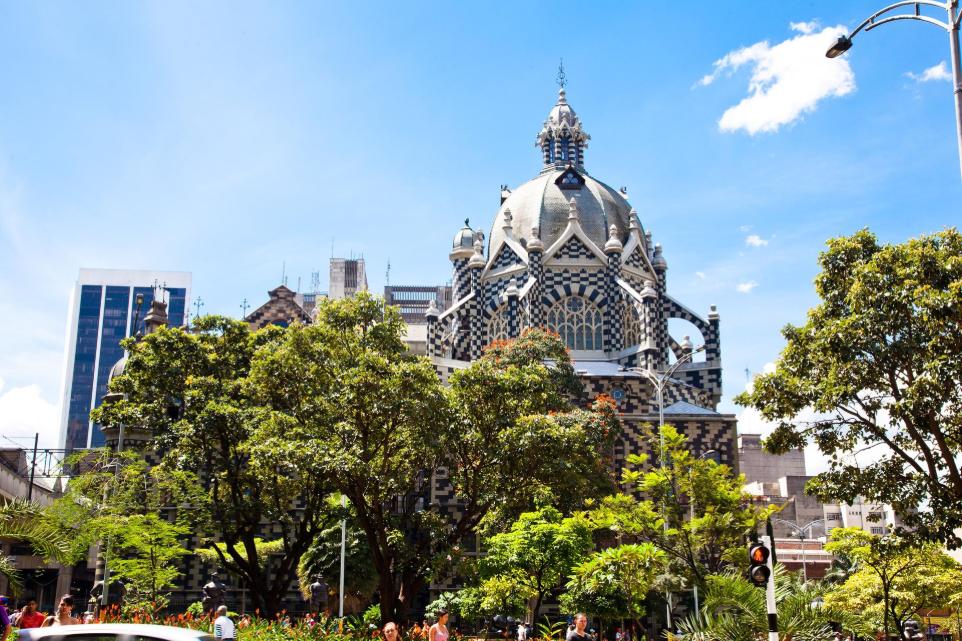
Palace of Culture
In the heart of Medellín’s historic center stands one of the city’s most iconic buildings: the Rafael Uribe Uribe Palace. This imposing structure, renowned for its Neo-Gothic style and distinctive black-and-white façade, is one of Antioquia’s most important architectural landmarks and a must-see when visiting Medellín.
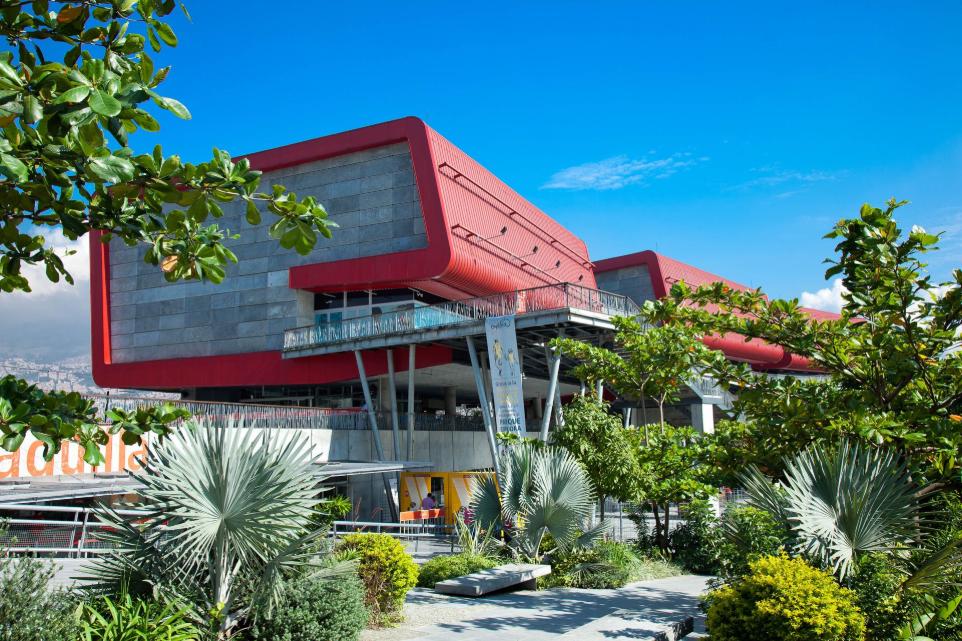
Explora Park
One of the most fascinating places to visit in Medellín is Parque Explora, a modern interactive science and technology center that has become one of the city’s top attractions. Its contemporary architecture, characterized by its iconic red structure, makes it a landmark in the northern part of the city.
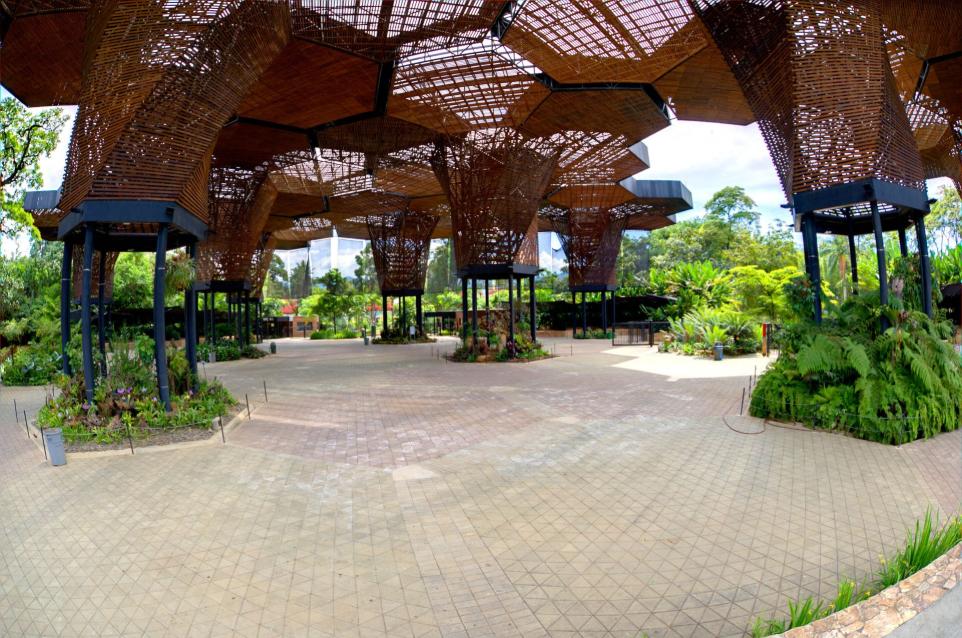
Botanical Garden
One of the site’s most distinctive architectural features is the Orquideorama, an innovative structure inspired by the forms of nature that has become an icon of Medellín’s contemporary architecture. This space is used for cultural events, exhibitions, and educational activities that strengthen the connection between nature and culture. 222
National Palace
Built in the early 20th century and designed by Belgian architect Agustín Goovaerts, it stands out for its elegant Republican-era style and its metal-and-glass structure that covers the central courtyard. For many years, it served as the headquarters of important judicial and administrative institutions in Antioquia, making it one of the most significant buildings in the historic district.
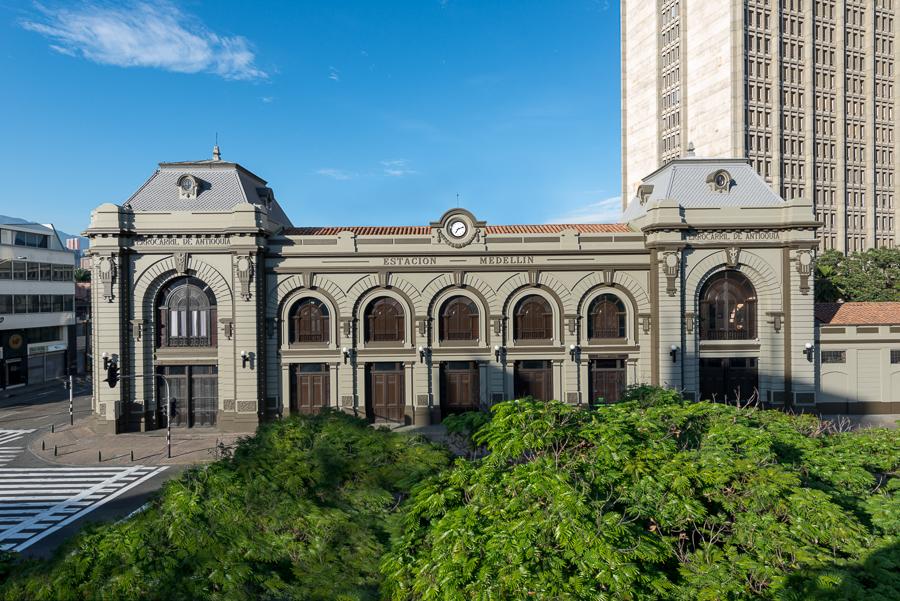
Railroad Station
Today, it is remembered as one of the symbols of Antioquia’s progress and a place of great interest for those who wish to understand the history of transportation, commerce, and the city’s modernization. For many visitors interested in tourism, this place serves as a gateway to discovering how the railroad contributed to the economic and urban development of the Aburrá Valley.
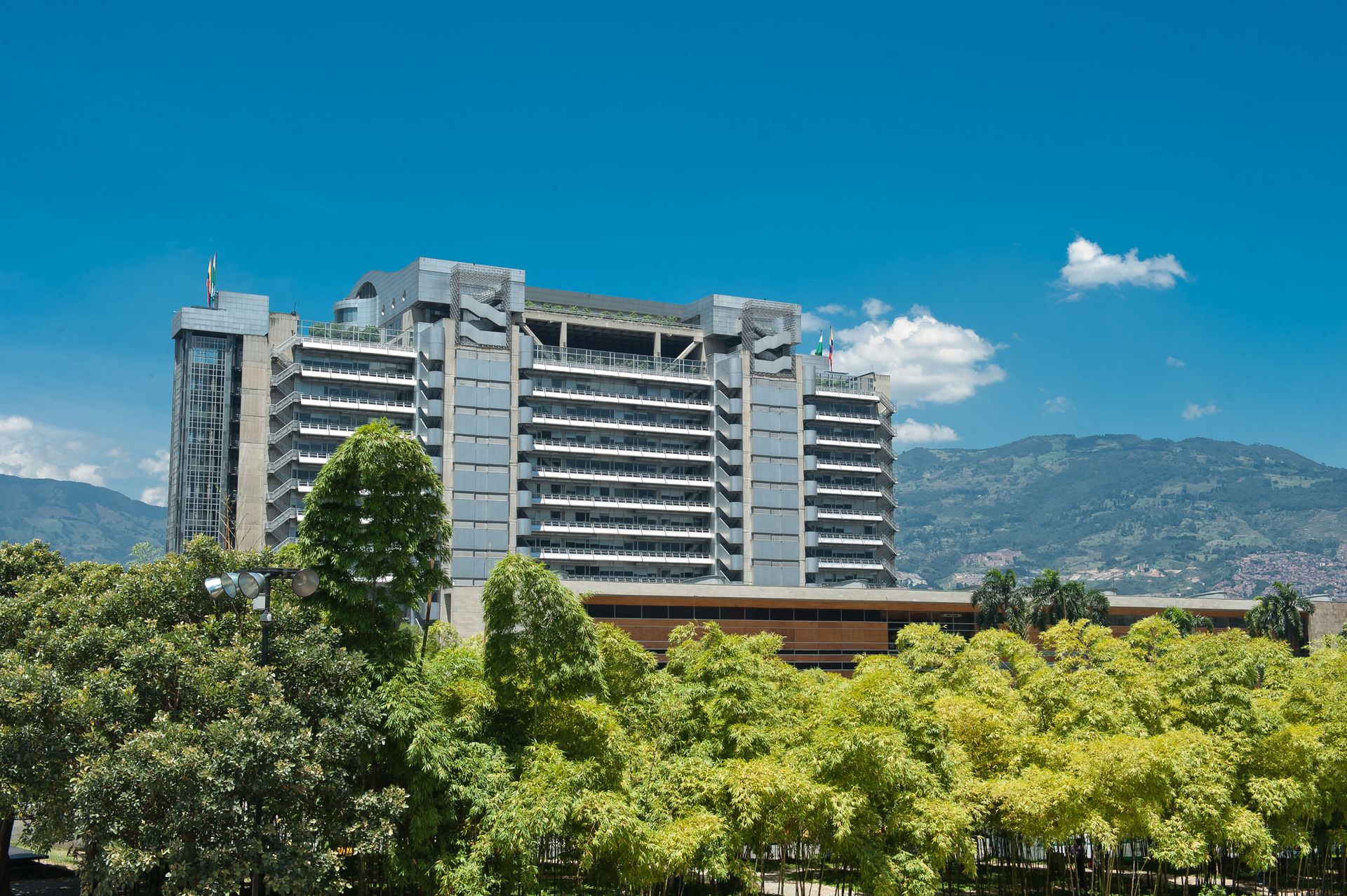
EPM Building
This modern complex is part of the cultural and urban district surrounding the Parque de los Pies Descalzos and the Water Museum, spaces that reflect the city’s commitment to sustainability, education, and urban development. This building embodies the vision of a city that is committed to technology, sustainability, and development as the pillars of its growth.
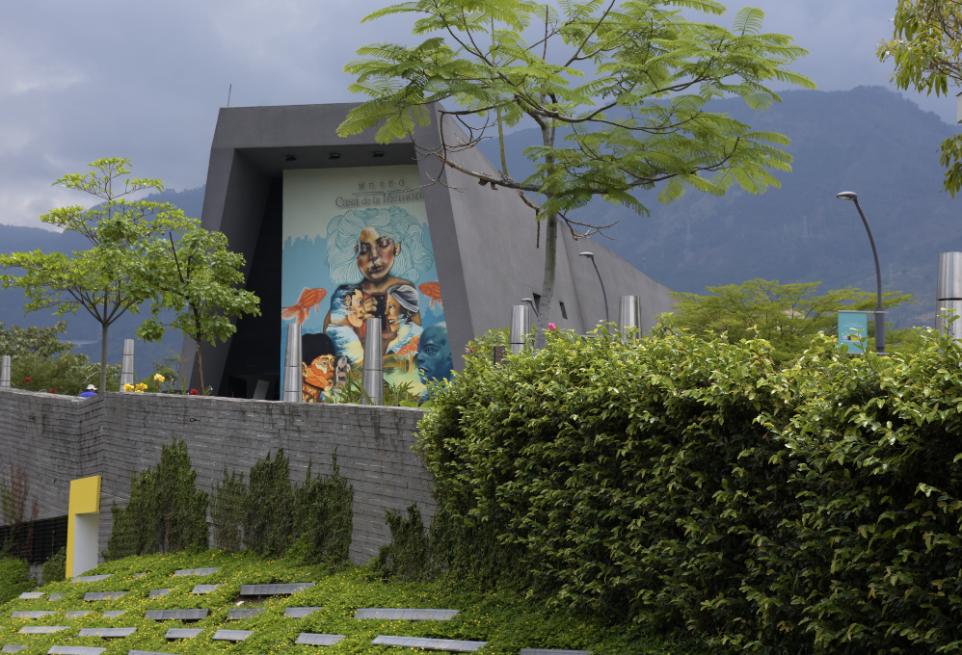
Museum of Memory
It was established as a center for historical memory that collects testimonies, exhibits, and accounts related to the conflict and the communities’ resilience. Through its interactive exhibits, audiovisual archives, and temporary exhibitions, the museum offers an in-depth look at the city’s social and cultural history.
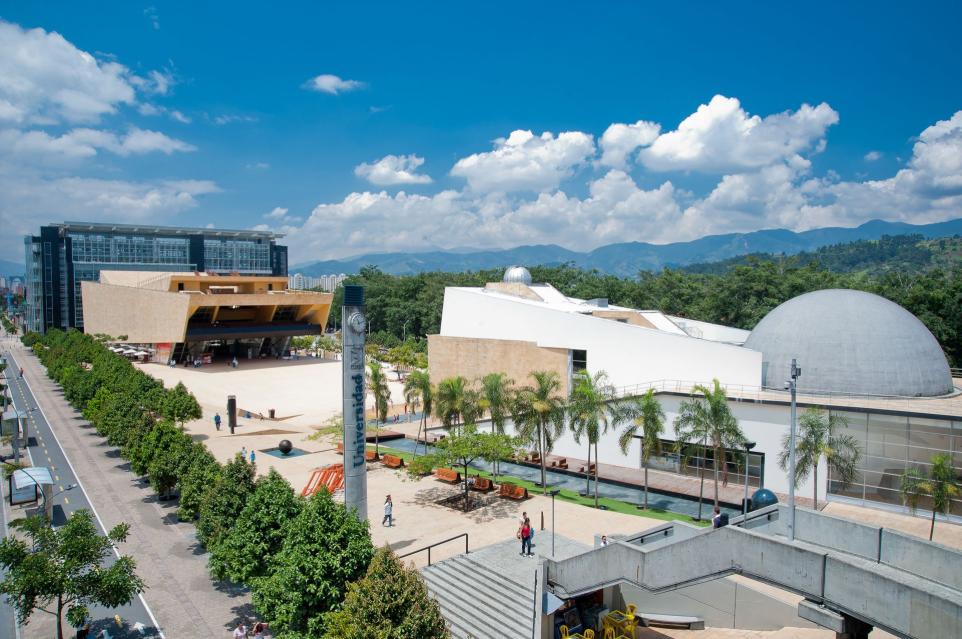
Park of Wishes
Located across from Parque Explora and very close to the Medellín Botanical Garden, Parque de los Deseos is part of one of the city’s most important cultural and scientific corridors. This area has established itself as an ideal destination for those who wish to visit Medellín and discover innovative spaces that reflect its urban transformation.